

An air-to-water heat pump is often the most advantageous solution
In the previous article, we explained how to choose the right heat pump. Here we focus on air-to-water heat pumps, their features and design, installation and servicing, and the comfort they offer.
Air as an energy source
This type of heat pump collects energy from the surrounding air and transfers it to a water-based heating system. The working medium is heating or cooling water. Based on their design, heat pumps are divided into split and monobloc units.
Split and monobloc systems
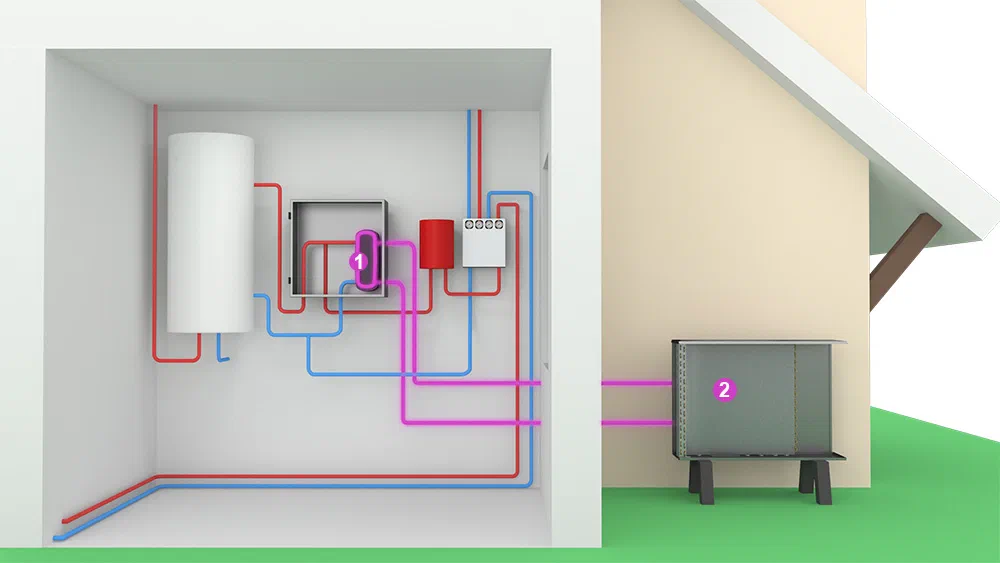
In a split system, refrigerant is present in both the outdoor and indoor units. During installation, a technician connects the units and works with the refrigerant circuit and its charge. In a monobloc, the entire refrigerant circuit, including the refrigerant, is inside the outdoor unit. Only heating or cooling water flows from it to the indoor unit. The installer of a monobloc heat pump therefore does not handle the sealed refrigerant circuit and does not need a licence to handle or store refrigerant.
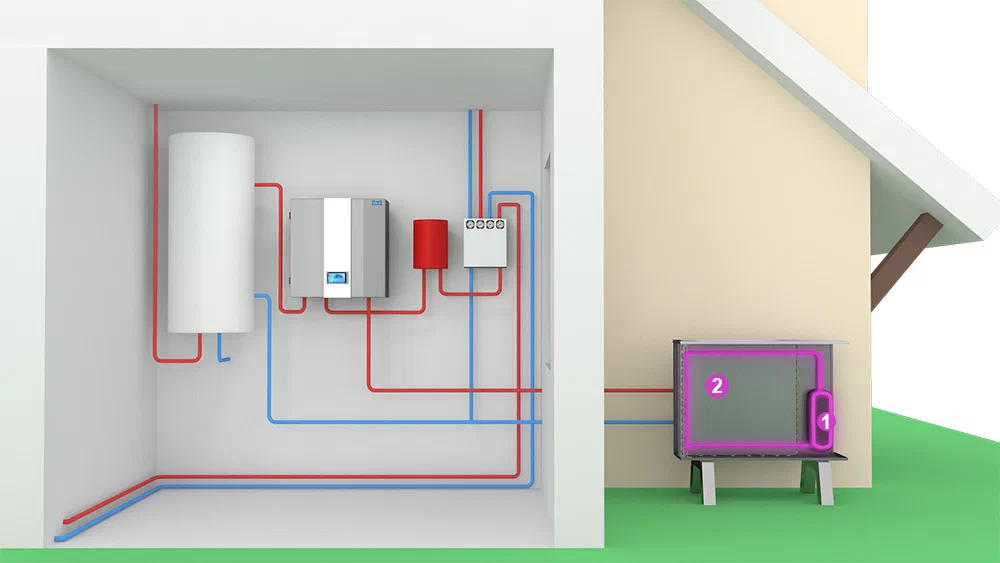

Condenser

Evaporator
Diagram of a monobloc installation in a family home. Refrigerant is present only in the outdoor unit.
Condenser
Evaporator
Diagram of a split installation in a family home. Refrigerant is present in the indoor unit.
Air-to-water heat pumps: technology and output ranges
Heat pump technology continues to develop. The latest inverter technology, which we also use in our heat pumps, adjusts output to the home's current needs. Some heat pumps operate only in ON/OFF mode. Frequent starts cause the most wear and can shorten the service life of components. Inverter technology has another important advantage: regulated output means fewer starts, less component wear and lower operating noise. ATTACK heat pumps are designed for R32 refrigerant, which has a minimal impact on the Earth's ozone layer.

GWP, or global warming potential, measures how much heat a greenhouse gas traps in the atmosphere over a given period. R32 refrigerant reduces GWP by up to 75% compared with common refrigerants.
What is an air-to-water heat pump made of?
A heat pump is a relatively simple device that works on a principle similar to a household refrigerator. It consists of a refrigerant circuit with two heat exchangers — a condenser and an evaporator —, a compressor and an expansion valve. It transfers energy from a renewable source in the outdoor environment, such as water, air or the ground, into the building.
Indoor unit
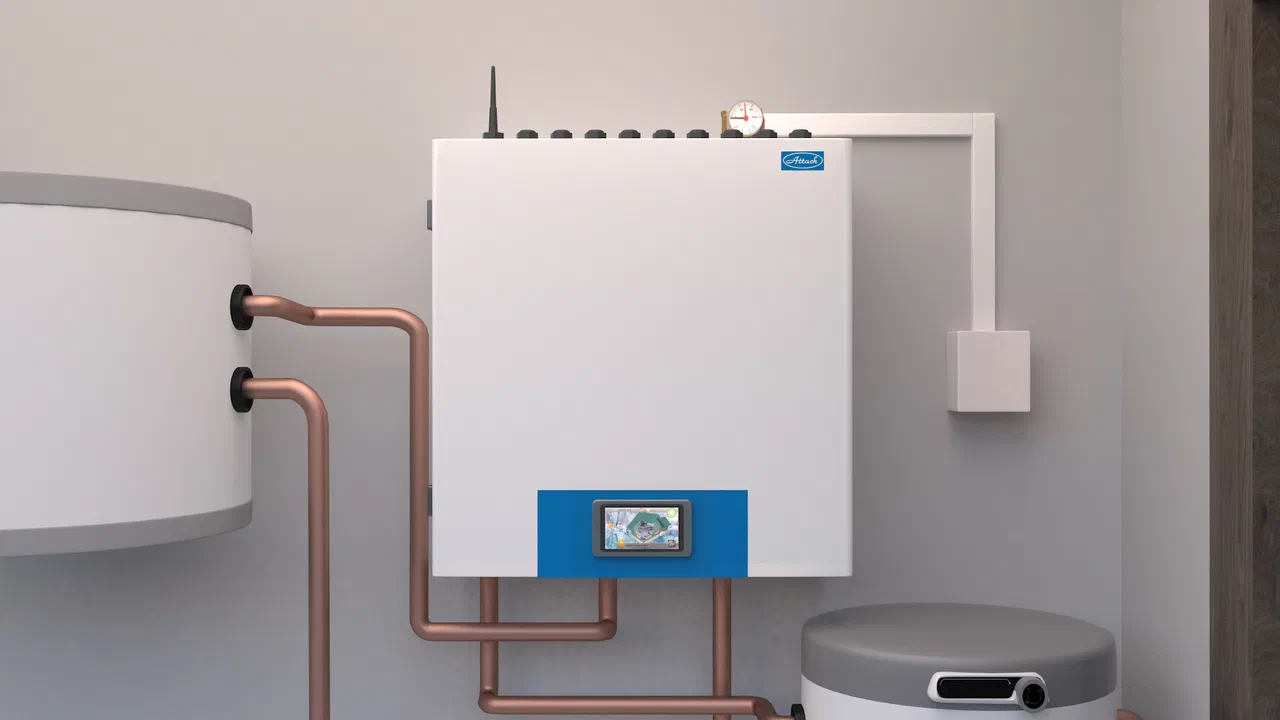
The indoor unit is installed in a boiler room or utility room. This hydronic unit transfers water from the outdoor unit to the heating system or domestic hot water system. Its simple, intuitive display lets you control the heat pump directly on the unit. The indoor unit of an air-to-water heat pump is quiet compared with other types of indoor units.
Outdoor unit
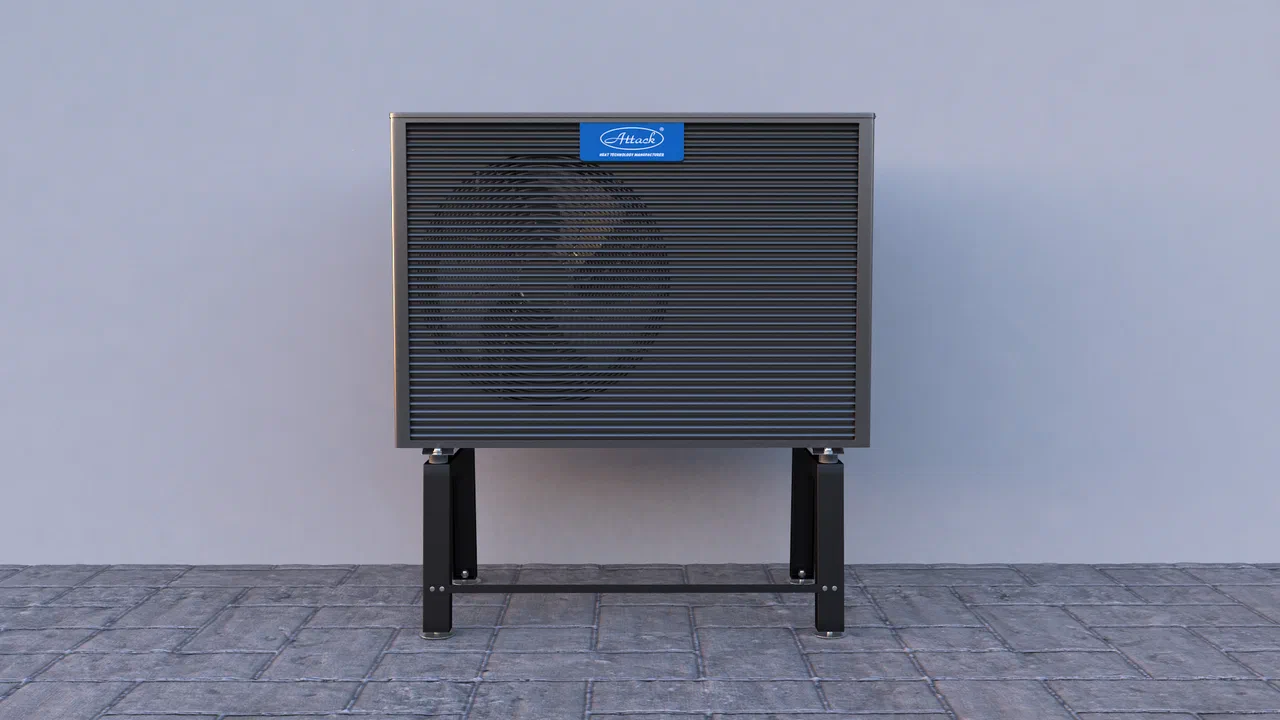
The monobloc outdoor unit contains all the components of the refrigerant circuit. Heated or cooled water leaves the unit and flows into the indoor hydronic unit. The outdoor unit can be placed in a suitable location, ideally some distance from the house.
Simple installation and servicing
As mentioned in the previous article, the monobloc air-to-water model is the simplest type of heat pump to install. It is connected in a similar way to an electric boiler. Installation does not require complicated work, and servicing can be quick and straightforward because only the hydraulic circuit needs to be connected. The components are arranged clearly, and their design makes maintenance and servicing easier. A service technician does not need a licence or qualification to handle and store refrigerant during installation.
Convenient controls
A heat pump that works automatically offers a high level of comfort. The indoor unit software includes additional functions and timers for setting heating, hot water and cooling programmes. There are three ways to control the heat pump: A. Directly on the indoor unit using a smart five-inch touchscreen with a simple, intuitive interface. B. With a range of controllers that let you control the unit with a room thermostat from anywhere in the house. C. Over the internet: an optional Wi-Fi module lets you control the unit when you are away from home. A heat pump offers low running costs, simple controls, year-round operation, the option of receiving a grant through the Zelená domácnostiam programme, and suitability for almost every family home.